A CITY. A POET. TWENTY-FIVE MONTHS.
Read with the seasons.
A leaf, a radiator, a glove, a porch. Explore the things that carry Ed’s story, one month at a time.
Purchase Ed on Amazon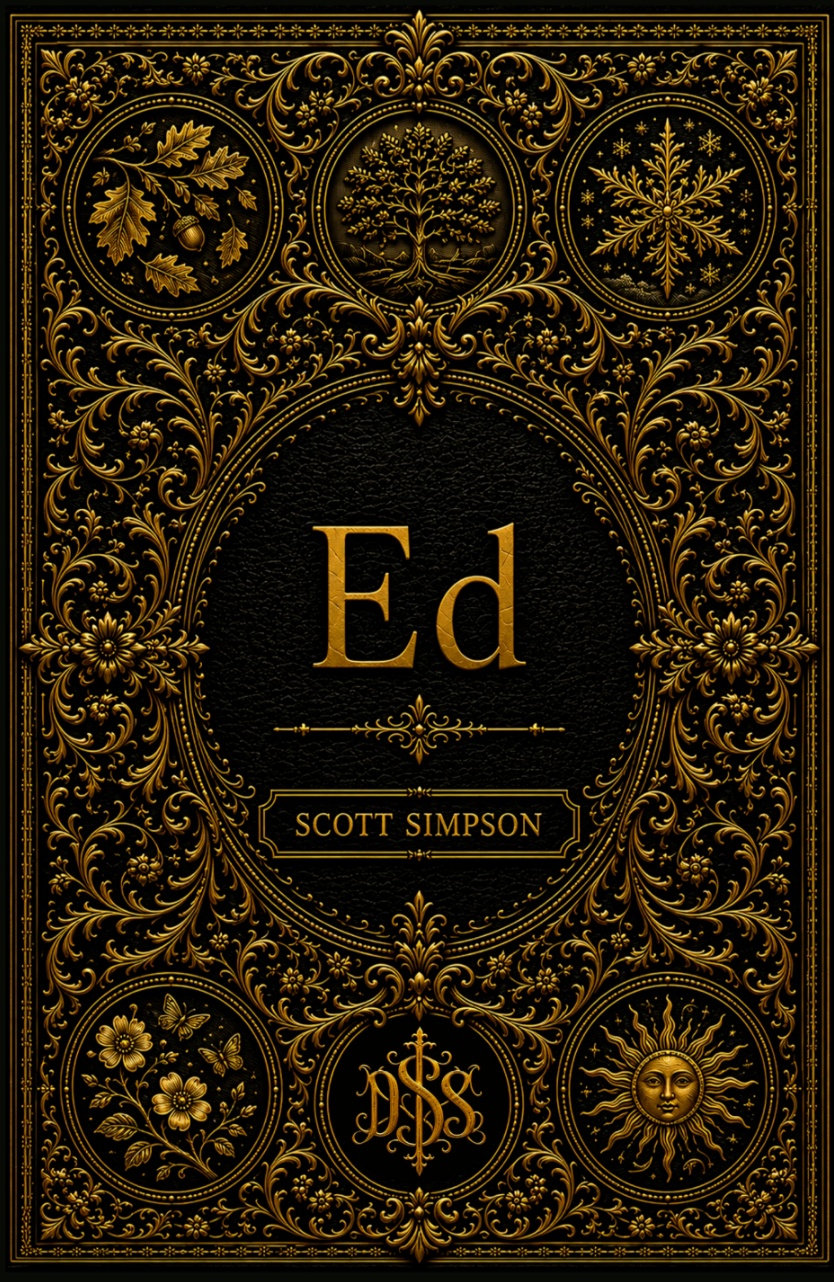
The story calendar
September to September, across three cyclesSelect a month you have finished to explore its poem, seasonal imagery, and a reading question. Later months stay closed.
BEFORE THE FIRST LEAF
Begin wherever you are.
The novel is told through twenty-five interconnected monthly stories. A poem stands at the threshold of each chapter. Mark your progress above to open its place in the calendar.
Before-reading question: What changes when a season becomes a way of telling a human story?
Threads through the novel
Interpretations grow with your readingThe people around the poem
Character notes through your completed chaptersChicago, in ordinary places
Streets, rooms, water, and shared airExplore places as they enter your reading. Map details come from the supplied book map and illustrate its literary setting; they are not a street-navigation guide.
The complete book map
The complete map contains late-book quotations. It stays closed until you finish the novel, including the epilogue.
At the threshold of each month
The poems, with room to look againRead poems from chapters you have completed. Preserve the line breaks; notice how an ordinary thing becomes a point of encounter.
Ed’s poetic influences
The book’s introductory pages name e. e. cummings, T. S. Eliot, Donald Hall, Robert Frost, Ted Hughes, Ted Kooser, Scott Simpson, William Stafford, and William Carlos Williams.
As you read, notice spacing and syntax, urban fragmentation, ordinary objects, memory, silence, weather, and the relationship between human stories and earth stories. These are invitations to close reading, rather than claims that every poem uses every influence.